FALL2016
MLBLUE
63
Plants and animals depend on darkness. Constant light pollution—defined as man-made light that brightens the night
sky—candisturb thegrowthpatterns anddevelopmentofmanyplants andanimals.Numerousbird specieshunt andmigrate
at night and light pollution disturbs these activities; and scientists suspect that light pollutionmay be related to the global
decline in amphibianpopulations.Natureneeds darkness.
Walk along the open rock trails at Torrance Barrens during the day and youmight see nationally rare bird species like the
Cooper’s hawk soaring overhead, or a threatened easternMassasauga rattlesnake or hog-nosed snake. Long boardwalks over
wetlandsgivehikers achance toget close toprovincially rareplants like thewhite-fringedorchidorpeer insideapitcherplant.
On a typical evening, recreational astronomers set up telescopes in clusters, waiting for the sun to go down. In winter, a
snowmobile trail transects the property andXC ski trails criss-cross the snow. Day or night, winter or summer, the unusual
topography combinedwith the dark skiesmake theBarrens unlike anyother place inCanada.
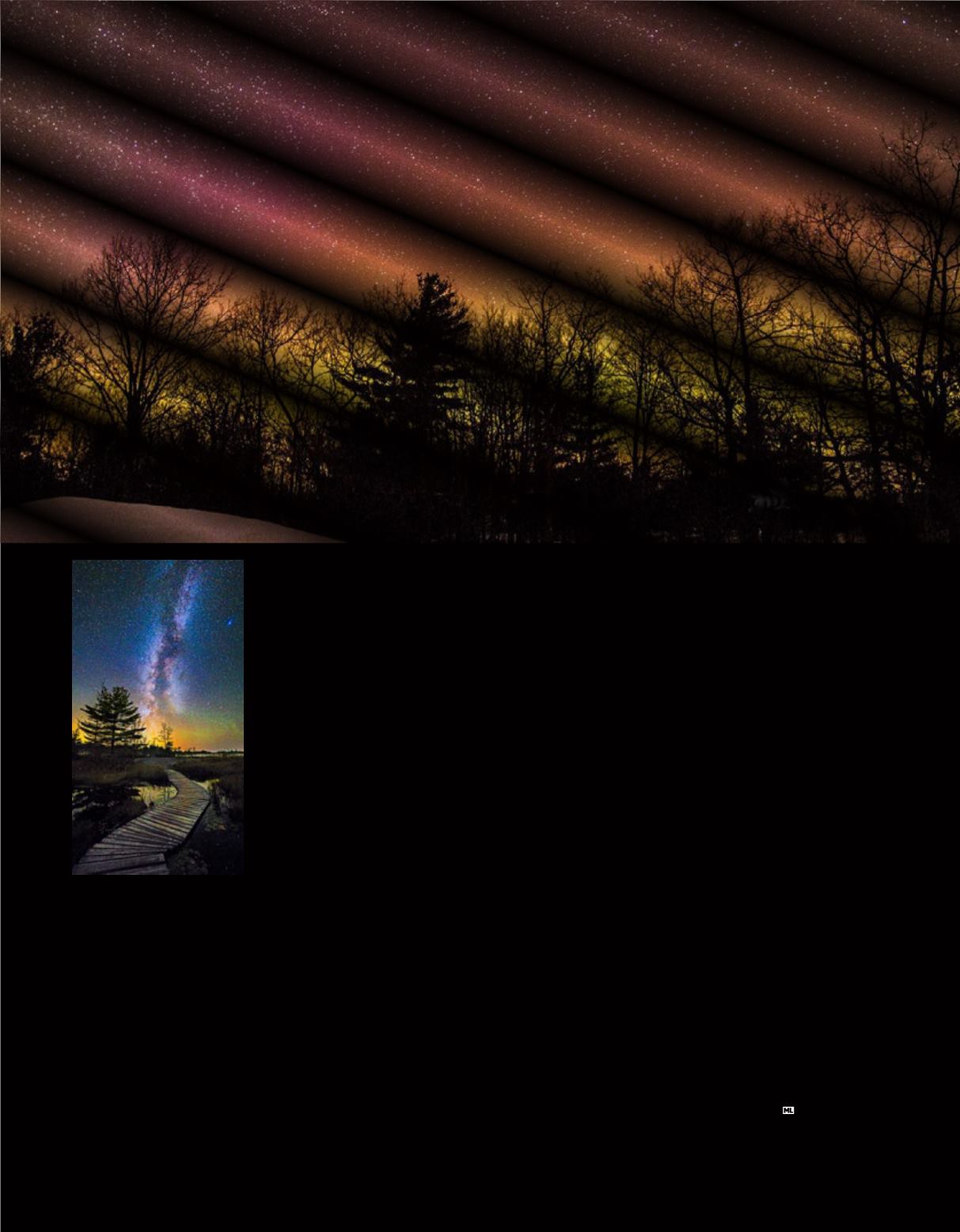
Pro photographer andMuskoka residentWesley Liikane stumbled acrossTorrance Barrens while riding hismotorcycle. He
laterdiscovered its classification as aDark-SkyPreserve and returned atnightwithhis camera. “During anight shoot you can
hearnatureand itsorchestra,” saysLiikane. “From themigratingbirds andhowlingcoyotes to the frogs and the insects—there
is somuch to listen towhile enjoying the view.”
In an infrared satellite image ofOntario, theBarrens is adark island in a sea of light. Light pollution ismost often associated
with urban spaces, but is also an issue in cottage country, where visible numbers of stars and celestial bodies are greatly
diminished by floodlights and the reflection of lights off water. Replacing bulbs with lower wattage, selecting fixtures that
direct lightdown, andusing low-colour-temperatureLEDs are threeeasyways to reducepollution. “There is awhole industry
aroundnight-sky-friendlyoutdoor lighting,” says JanMcDonnell.
“The other thing you cando is just turnout the lights. It’s not rocket science.”
ThePreserve is a celebrationof thenight sky and allows everyone and everything to thrive in thenatural rhythmof light and
dark. And it gives people the chance to reconnect with natural darkness in all seasons. “I can’t adequately describe what it’s
like tobe out there and see a billion stars,”McDonnell adds. “You just don’t get a sense of the night skies until you see them
out there.”Bundle up and visit theBarrens this fall orwinter. Anddon’t forget to turnoff the lights.
Official site:
,Dark-sky-friendly lighting guide:
Wesley Liikane Photography
Typically, you find
yourself alone with
the stars here.


