16
MOUNTAINLIFEBLUEMOUNTAINS
SPRING2016
HOWTOBECOME
APHOTOGRAPHER
FIELD
NOTES
When I first started looking through a viewfinder, I
thought every frame I was liningupwas destined
for the pages of
National Geographic
. Even though
I didn’t understand ISO, f-stops, or shutter speed.
Inmymind it didn’tmatter.After all,when it
comes tophotography, it’s themagician, not the
wand right?
Boywas I wrong. Because if I was themagician
in thatmetaphor, I was a crappy one.My early
images are terrible.Out of focus, poor composition
andboring subjects being just a fewof themajor
problems. But actually practisingwas the real
issue. In the days of filmwhen every photo (slide
film) cost close to a dollar toproduce (and I was
broke) therewas a constant inner conflict between
clicking the shutter and/or spending themoney. I
can’t imagine howmuchquicker kids in the digital
age progress.
Over the years I’ve improved. I still haven’t
produced anythingworthy of
National Geographic
.
And I’mquick to see the errors inmy ownwork.
I’ve taken a fewworkshops over the years, and
worked as a photo editor for awhile, bothof
whichhave helpedme progress.
Of course I get the insulting comments like,“your
camera takes really nice photos.”Or the always
awesome,“I wish I had your job. I would love to
just take pictures all day.”
Me too! I’d really, really love to skip all the post-
shootwork.And the pre-shootwork too.And the
cataloguing, the editing, the hustling, the selling,
the pricing. But don’t getmewrong, I still think it’s
one of the best gigs going.
I alsoget the inevitable questions like—Canonor
Nikon?Towhich I have no response; because it
really doesn’tmatter.
Andonce in awhile I get the question,“Howdo
youbecome a professional photographer?”
This one requires a bit of thought. If I was in
the business of givingpeople career advice I’d
say practise.You can’t be a photographer if you
aren’t takingphotos. So shoot, shoot and then
shoot somemore. Learn touse your camera, your
computer and everything inbetween. It doesn’t
matterwhat kindof camera you’re using, find
something you love to shoot and shoot the hell out
of it.There are peoplewhomake a living shooting
waves.Or snowflakes.Ormodel tanks.
I can accreditmost ofmy skill togoodold-
fashionedpractise.Years of gettingbehind the lens
and in front of a computer screen.
And there’s only one other piece of advice I’d
be qualified togive, and it’s probably themost
essential advice for anyone starting any kindof
business: never, ever, ever give up.
Because you’ll get better every time you click the
shutter.And eventually, if you’re persistent, people
will start paying you todo just that.
And that’s the dream isn’t it?
–Colin Field
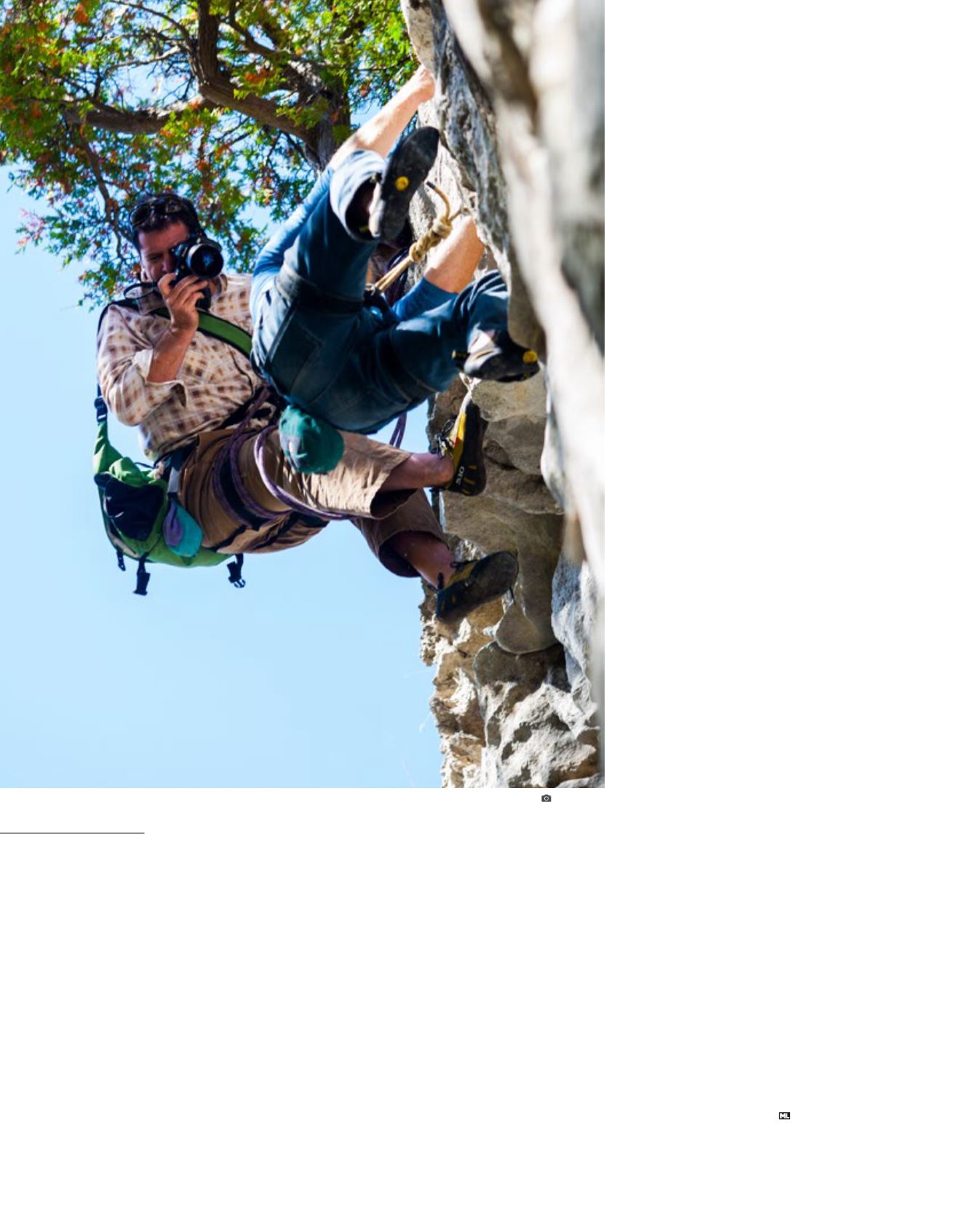
PhotographerGlenHarris danglingatMetcalfeRock. COLIN FIELD
“My early images are terrible.
Out of focus, poor composition
and boring subjects being just a
few of themajor problems.”


