64
MLBLUE
SPRING2017
words :: NedMorgan illustrations :: Dave Barnes
What comes tomind when you think of the Bruce Trail? A conservation
corridor that protects greenspace throughout the country’s most populous
region? Aplace where the biodiversity of the Niagara Escarpment is
accessible to everyone? Many of us understand the incalculable value of
Canada’s longest public footpath, which celebrates its 50
th
birthday this
year. But what if we added “chronic disease treatment” to the list of the
Trail’s benefits—would you believe it?
If you think you feel good after exercising outside, youmay not know the
half of it. Research keeps piling up citing frequent exposure to nature as
a proven catalyst for better physical andmental health. (Google “nature
therapy” and you’ll see what we mean; this field has exploded in the last
five years.) But what if hiking the Bruce Trail could accomplish something
evenmore encouraging—what if it could provide therapy for those
suffering from chronic disease? According to Karen Kowalchuk, the Trail
does exactly that.
Kowalchuk suffers from Parkinson’s Disease (PD) and hiking ismore than just
a pastime she refused to give up after her diagnosis. It is integral to her
ongoing resilience. “The Bruce Trail helpedme discover more about PD and
how it works withme—what I can do andwhat I can’t do,” she says. “With
PD it’s critical to stay safe. You don’t want to fall. But contrary towhat you
might think, hiking on uneven and unpredictable surfaces is actually easier
for me thanwalking in a straight line or on a street.”
TRAILTREATMENT
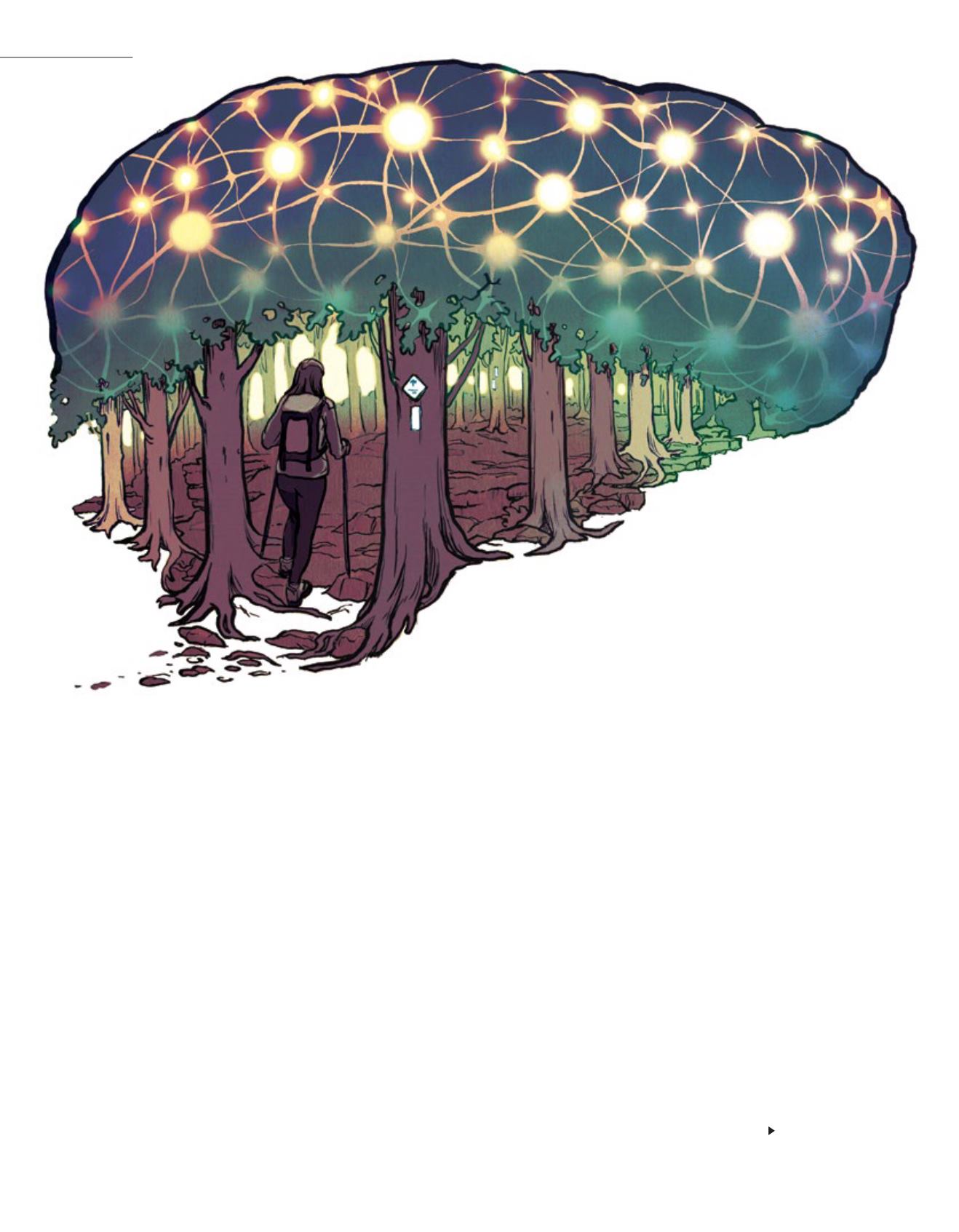
HOWAHIKERUSESTHEBRUCETRAILTOTREATCHRONICDISEASE
WELL
NESS


